Hiawatha
Mariners' Museum, Uncurated Search Results
Type: Bugeye
Year: 1884
Builder: E. J. Tull
Location: Pocomoke City

These records are found in the online catalog of The Mariners’ Museum and Park in Newport News, Virginia. Uncurated search results are presented to give researchers and interested readers an idea of whether the museum’s archives contain information about this vessel and whether it may be worthwhile to visit the museum’s catalog search page for further investigation. Uncurated results may be inaccurate or incomplete.
Search mode: Exact Name. Search phrase(s): "Hiawatha". Results returned: 12. Results displayed in this table: 12.
Use these buttons to send uncurated search results to your own app or text document for further research. First, check the box for any row, or click "Select All" then uncheck any rows. Then click "Show Selections". You can then copy your selections from the text box and past them into your app.
| Fetch? | Row ID | Media | Date | Vessel | Place | Related Places | Inscription/Marks | Subject | Notes | Archive Number |
|---|---|---|---|---|---|---|---|---|---|---|
| 1 | No image URL. | Regular not cataloged. | Pine country Hiawatha. | LB92985 | ||||||
| 2 | No image URL. | Chicago, Milwaukee, St. Paul, and Pacific Railroad Company. | Railroads–Washington (State)–Puget Sound. | The Hiawatha navy: the Milwaukee Road and Puget Sound. | LB47368 | |||||
| 3 | 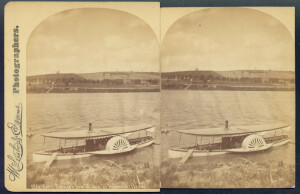 | on recto: 1261. CAPT. TRUMAN'S STR. "CLARA." AT "HIAWATHA" ISLAND, on verso: Capt Trumans Steamer "Clara at Hiawaha Island N.Y. | View of very small paddlewheel steamboat "Clara" in the water at Hiawatha Island. | MS0091/02.02-02#431 | ||||||
| 4 | 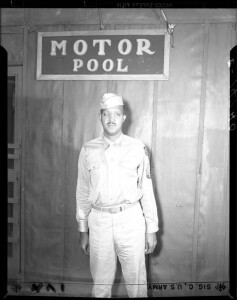 | 7/10/1945 | T/4 Hiawatha M. Lynn, 32987737, Camp Hill Motor Pool, New York City, N.Y., is shown in front of Motor Pool Office. He was voted the Soldier of the Week. Photo taken for publicity purposes, at Camp Hill, HRPE, Newport News, Va. | African American soldiers.; Incentive awards–Virginia–Newport News. | Portrait of an African American soldier, he standing underneath a sign that reads: Motor Pool. | P0003/01-#E-14740 | ||||
| 5 | 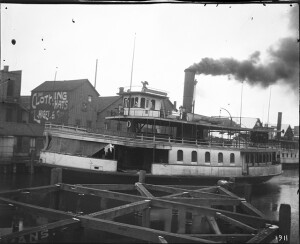 | 2/9/1896 | Omar D. Conger (Steamboat : 1882).; Hiawatha (Steamboat : 1874). | Omar D. Conger - Hiawatha; 1911 | Steamboats–Michigan–Port Huron.; Harbors–Michigan–Port Huron. | Shows a port side view of a tugboat in a harbor, black smoke rising from her stack. Stanton's notebooks contain the following information about this item: "Port Huron, Feb. 9 1896" | MS0094/01-#1911 | |||
| 6 | 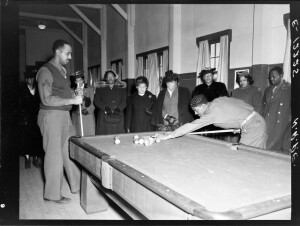 | 1/31/1945 | United States. Army. Camp Hill (Va.). Recreation Hall. | Women of the Housing Committee of Newport News are shown looking on in Recreation Hall, Camp Hill, HRPE, Newport News, Va., while Pt. Earl Walker, ASN 32316639, home White Plains, N.Y., Camp Hill Bandsman; and Cpl. Hiawatha M. Lynn, 32987737, home, New York, N.Y., play pool. Photo taken for Historical purposes. | Citizens' advisory committees–Virginia–Newport News.; Pool (Game)–Virginia–Newport News. | Two men play pool while a group of women watch in the background. | P0003/01-#E-12225 | |||
| 7 | No image URL. | Great Lakes (North America)–Pictorial works; Michigan–Pictorial works | Lighthouses–Michigan | Cover title. | LB32769 | |||||
| 8 | 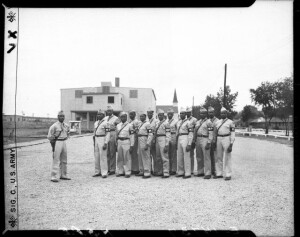 | 7/12/1945 | United States. Army. Military Police. | M.P. Platoon, Camp Hill Command, HRPE, Newport News, Va. At extreme left, is S/Sgt. Elijah Ward, 34325650, Halls, Tenn. Front row, left to right: Cpl. Joe Waiters, 34417603, Demopolis, Ala; Pfc. Robert L. Yancey, 34417159, Auburn, Ala; Pfc. Frank Pulliam, 34550085, Atlanta, Ga.; Pfc. Phillip Perkins, 34417750, Mobile, Ala; Pfc. Clark H. Adams, 34417576, Tuskegee, Ala; Pfc. James Clayton, 34416839, Sardis, Ala; Pfc. Enphus Williams, 34327196, Shelbyville, Tenn. Back row, left to right: Sgt. Hiawatha Adams, 34415714, Columbus, Ga.; Pfc. Phenois Harris, Lexington, Tenn.; Pfc. W.Q. Price, 34328401, Memphis, Tenn.; Pfc. Willie McNear, 34327352, Alcoa, Tenn; Pfc. Sid Hurton, 34417656, Athens, Ala; and Pfc. Clinton Samuel, 34417651, Demopolis, Ala. Photo taken for publicity purposes. The above named are all of the M.P. Detachment at Camp Hill. | African American soldiers. | Group portrait of thirteen African American MPs, their commander is standing to one side. | P0003/01-#E-14737 | |||
| 9 | No image URL. | Champlain Valley–Antiquities. | Champlain tercentenary celebrations.; Geology–Champlain Valley | Lettered on cover: State of New York. The Champlain tercentenary. 1909. H. Wallace Knapp, chairman. Appendix: Samuel Champlain and the Lake Champlain tercentenary, by H. W. Hill. The geology of the Champlain Valley, by J. M. Clarke. Episodes in the history of the Champlain Valley, by F. H. Severance. What early travelers said of the Champlain Valley, by F. H. Severance. Libretto of the play of Hiawatha [by L. O. Armstrong]. "Analytical index compiled by Charles Alexander Nelson, head reference librarian (retired) of Columbia university": p. 465-534. | LB13985 | |||||
| 10 | 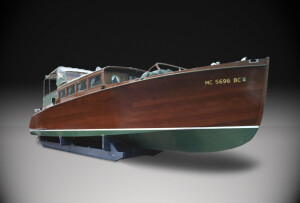 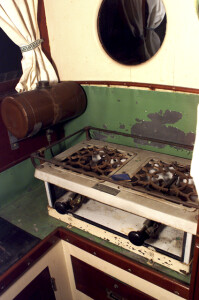 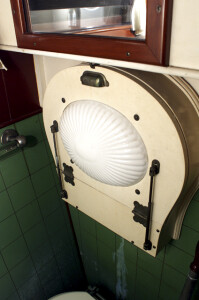 | SHORT DESCRIPTION: Simokon is a 38’ commuter built by Chris Smith and Sons Boat Company of Algonac, Michigan in 1929. Hull #5031. She is a dual-control, double-concave V-bottom express cruiser, with varnished double planked Honduras mahogany over white oak frames, with brass and bronze fastenings, edge grain fir deck planking, and nickel silver hardware and deck fittings. The cabin roof is painted canvas over wood. Simokon will seat 22 passengers: ten in the cockpits, four on the bridge, and eight in the cabin. She also sleeps six: four in the main cabin, one in the forward cabin and one on the bridge deck. Simokon is currently powered by a 6-cylinder L-head 200HP Chris-Craft marine engine (rebuilt in 1940). She is fitted with a 3-bladed manganese-bronze propeller. Her top speed was around 30mph. The total fuel capacity is 175 gallons, which was stored in tanks on her port and starboard sides. Simokon is also fitted with a 30-gallon water tank. The boat is fitted with a fully automatic LUX fire protection system and electric bilge pumps. There was a “speaking tube” from the bridge deck to the Forward Cockpit for communication. The instrument panels were embossed and chased with mahogany steering wheels with throttle and spark levers. Below decks in the main cabin, the color scheme is green and white; green upholstery and carpet, with white curtains on the screened roll down windows, white bulkhead, and mahogany paneling throughout. The port and starboard settee backs swing up to make upper berths, and a removable mahogany dining table fits into stanchions on the portside settee for sleeping. Lockers and drawers are fitting into all possible spaces. The buffet locker to port, with a leaded glass door, has shelves and cutouts for glasses, and a locking silver cabinet below. Opening the folding mahogany doors into the forward passageway, is the clothes locker to starboard with a perforated diamond pattern on the mahogany door. The head (bathroom) is also on the starboard and has a full length mirror outside the mahogany door. Inside are the usual facilities including a modern pumpable holding tank, a fold up shell-shaped china washbowl and chrome plated pump with ivory handle. There is a screened lift vent overhead, and a fixed port light forward. On the port side is the compact galley (kitchen) with room for one person. There is a small enamel sink with hand pump, a two burner alcohol stove with sea rails and alcohol tank, and a large zinc lined ice box below. Over the sink is a drop-door passage through to the main cabin, dish racks above and lockers below. A large 1x2’ metal surface work space lies under the windows between the sink and stove, with a screened lift vent overhead. At the forward end of the small passageway is the access door to the forward cockpit, with a seat back on the forward side, for the disappearing seat step. Simokon has a Penn Yan “shoal green” dinghy with two oars. There is a special dinghy bracket mounted on the starboard side of stern. The boat is also fitted with a 1929 Johnson long-shaft 24hp opposed twin cylinder outboard motor for trolling or as an auxiliary motor. NOTES: These custom yachts were delivered to their new owners fully “found”, complete with dishes, table linens, silver, glassware and cooking equipment. Conveniences included two cigar lighters, four interior lamps, and an eight-day clock. Also included were two dock lines, two anchors, four fenders, a boat hook, life preservers, a boarding ladder, a tool kit, chart case, compass, fog horn, ship’s bell, a search light, three flags, weather curtains and canvas tops. The 38-footer was acclaimed the most noteworthy model offered in 1929, and sold for the price of $15,000. The commuter was a water limousine and party yacht. It was used to travel from home to office, at “express” speed. A year’s production was sold out the first day of the New York Boat Show. These boats represented the state of the art in power boats during the late 20s, a vital period in the history of American yachting. Throughout her life Simokon was owned by some fairly famous businessmen. She was purchased from Chris Craft and Sons in July 1929 by Ralph T. Rogan of Proctor & Gamble in Cincinnati Ohio and named “Arrah-Go-On”. In July 1941 she was sold to R.E. Vernor, who owned Vernor’s Ginger Ale in Bay View, Michigan. She was renamed “Simokon” (after the character Nokomis in Henry Wadsworth Longfellow’s poem ‘Song of Hiawatha’). In July of 1957 Simokon was purchased by Gari M. Stroh, Jr. of Stroh Brewery Company in Detroit, Michigan. Mr. Stroh donated Simokon to the Museum in December 1981. VESSEL INFORMATION - BOAT NAME: SIMOKON, COMMUTER BOAT BUILT: 1929 BOAT DIMENSIONS: 38-0-0 (LENGTH OA), 9-8-0 (BEAM) ENGINE: Chris-Craft Model WBR 6-cylinder, L-head gasoline inboard engine. It has a standby outboard engine: Johnson Model P-50 long-shaft two-cylinder two-stroke gasoline outboard. INVENTORY: American Flag with Anchor(1), Chris Craft Flag (2), IC Flag (1), Life ring (1), Parts. These items are associated with this boat. Please see component parts supplemental record for additional information. | CL21305 | |||||||
| 11 | 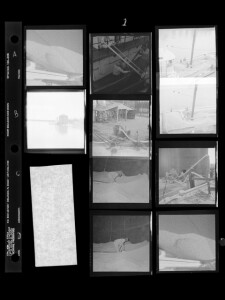 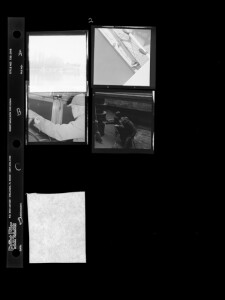 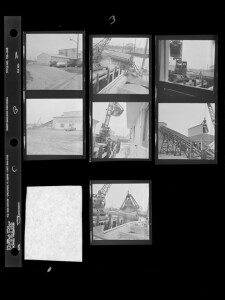 | 1992 | Maryland Shipbuilding & Drydock Company–Photographs.; Norfolk Shipbuilding & Drydock Co. (Va.)–Photographs. | Chesapeake Bay Region (Md. and Va.)–Photographs.; Chesapeake Bay (Md. and Va.)–Photographs.; Baltimore, Port of (Md.)–Photographs.; Coan River (Va.)–Photographs.; Rappahannock River (Va.)–Photographs.; Tangier Island (Va.)–Photographs.; Fishermans Island National Wildlife Refuge (Va.)–Photographs.; Elizabeth River (Va.)–Photographs.; Naval Operating Base (Va.). | Work boats–Chesapeake Bay Region (Md. and Va.)–Photographs.; Fishing boats–Chesapeake Bay (Md. and Va.)–Photographs.; Fishing boats–Chesapeake Bay Region (Md. and Va.)–Photographs.; Yachts–Chesapeake Bay Region (Md. and Va.)–Photographs.; Barges–Chesapeake Bay Region (Md. and Va.)–Photographs.; Canoes and canoeing–Chesapeake Bay Region (Md. and Va.)–Photographs.; Menhaden industry–Chesapeake Bay Region (Md. and Va.)–Photographs.; Grain trade–Chesapeake Bay Region (Md. and Va.)–Photographs.; Docks–Chesapeake Bay Region (Md. and Va.)–Photographs.; Marinas–Chesapeake Bay Region (Md. and Va.)–Photographs.; Harbors–Chesapeake Bay Region (Md. and Va.)–Photographs.; Marine railways–Chesapeake Bay Region (Md. and Va.)–Photographs.; Rivers–Chesapeake Bay Region (Md. and Va.)–Photographs.; Schooners–Chesapeake Bay Region (Md. and Va.)–Photographs.; Boating industry–Chesapeake Bay Region (Md. and Va.)–Photographs.; Boatbuilding–Chesapeake Bay Region (Md. and Va.)–Photographs.; Sailboats–Chesapeake Bay Region (Md. and Va.)–Photographs.; Gas industry–Chesapeake Bay Region (Md. and Va.)–Photographs. | Contains photographic negatives of the grain boat "Carol Ann", power suction tubes, unloading of cargo, Captain Arthur Eubank of "Carol Ann", Baltimore Harbor, Stephens' marine railway, Coan river, Southern States grain dock, the boat "Lillian Ruth", boat collisions at Rappahannock river, the grain ship "Magdalena Oldendorf", the boat "Eugenia", Mill Creek, Thorndike grain elevator, Norfolk Naval Base, Continental dock at Elizabeth river, grain boats, yachts, barges, fishing boats, workboats, aircraft carriers, Locust Point dock in Baltimore, the hydrokeel "Lida Lady", hover-crafts, the boat "Jim Lee", boat salvage, schooners, salvage from the schooner "Mary Hickman", Highland Landing Cove, the boat "Albert T. Graham", the ocean survey ship "Discoverer", compass adjustments, Maryland Shipbuilding & Drydock in Baltimore, the ship "Seafreeze Pacific", Miller's marine railway, the yacht "Cleapatra's Barge", NORSHIPCO Titan Drydock Operation, D. Addison Cockrell's marine railway, the excursion boat "Captain Thomas", J. D. Krentz marine railway, Tangier Island, Smith Fish Packery, the boats "Northern Eagle" and "Primavera", the boat "Carolinian", Smith Point marina, the menhaden boat "William S. Brusstar", the boat "Cape Charles", boat captain Odell Lawson, Fisherman's Island, the menhaden steamer"G. S. Alynn", the Coast Guard training vessel "Cuyahoga", the charter boat "Hiawatha", Zapata-Haynie dock, the fishing boat "Southland", Humphrey's marine railway, the boat "Raymond Humphreys", log canoes, Mathews County Yacht Club, the boat "Shell Keys", Spa Creek Harbor in Annapolis, the boat "Polly Doyle", Paul Anderton's Boat Shop in Annapolis, the sailing yacht "Anhelo", sailboats, the excursion boat "Miss Ann", the boat "Harvey Brewer", boat commissionings, Shackelford Fish Company, fiberglass boats, Hayes Boat Company, navigation instruments, Bowis marina, Adjootian's boatyard, tugboats, Columbia Liquid Natural Gas plant in Cove Point, Maryland, boat construction, and Reedville oil dock. | MS0199/02-15 | |||
| 12 | 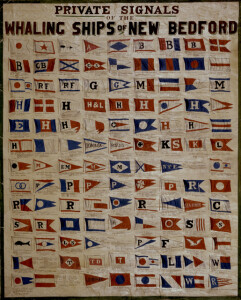 | SHORT DESCRIPTION: Oil painting on canvas by C. Newton titled 'Private Signals of the Whaling Ships of New Bedford.' There are many company/merchant flags shown with the names of their vessels and dates of operation underneath each flag. Looking at the dates of the vessels the painting appears to have been created sometime in the 1840s and received modifications as new ship's were added to each. There do not appear to be any entries made after 1869. NOTES: For information, see New Bedford Whaling Museum finding aids. Newspaper and other references found in object file. Gideon Allen and his brother, William, were whaling agents and investors from 1830 to 1887. Philip Anthony worked as a ship chandler and sold hardware at 91 Union in the 1841 New Bedford City Directory. He owned ship Menkar from at least 1845 to 1854. James Arnold was a merchant at Rotch's square. He owned the ship Cambria, which transported Frederick Douglass in 1847. George F. Barker and Abraham Barker were merchants at 117 Union in the early 1840s, also sold provisions and groceries from that address. Chapman & Bonney existed in at least the 1850s. In 1854 they purchased the schooner Union to be rigged as a brig and used in the North Atlantic whale trade. In 1859 their sail lofts burned in a fire. Coggshall should be spelled Coggeshall Cook & Snow was a partnership between Thomas Cook (1801-1890) and Loum Snow that began in 1828. They were wholesale and retail dealers in dry goods, merchant tailors, and outfitters, but also became involved in whaling trade. Snow left the partnership in 1859 and started his own company; his son joined him in 1867 to create Loum Snow & Son. Cornell & Penniman are listed in this painting as agents for bark Eliza in 1857, they were still agents for her in 1860. Oliver & George O. Crocker were brothers. In 1841 the firm of George O. Crocker & Co. had George T. Baker and Oliver Crocker as partners, and David Crocker as a laborer. They were merchants operating from 7 Commercial wharf. By 1843 the partnership between Baker, Crocker, & Co. of Boston and George O. Crocker & Co. of New Bedford had dissolved, leaving Baker to partner with Edmund Whitney to create Baker & Whitney selling sperm oil, candles, and other general commission business from their stores at 80 and 84 Water Street, which had been the address for Baker, Crocker, & Co. See The Boston Post, February 6, 1843. Elisha Dunbar & Co. was a partnership between Captain Elisha Dunbar and Edward C. Jones. Elisha Dunbar married Ann Howland in 1820, the daughter of John Howland Sr., who built them a house at 46 South Street. Edward Coffin Jones began his career as a stock boy, who worked his way up to being a ship owner and partner. When Dunbar died in 1839 Jones continued the firm alone. William Watkins worked for the company before starting his own (see below). John P. Knowles worked as a partner with T. & J.P. Knowles with Thomas. By 1887 The Boston Globe reported that John P. Knowles 2d was a ship merchant who was in debt. In 1890 the newspapers reported him as an insolvent debtor paying 40 per cent dividend. T. Knowles & Co.: Thomas Knowles worked with John P. Knowles and Joseph Knowles in th 1849 directory as dealers in groceries, provisions, dry goods, etc. at 24 Union. Jos Dunbar & Co. was Joseph Dunbar, a mercantile and whaling agent company. Henry F. Thomas (born 1824) worked for his father then joined Dunbar as a clerk and worked his way up to being a partner in 1845. He took control from 1850 to 1875. The company is listed in the 1836 and 1841 directories located at 9 Middle with Asa T. Lawton as a partner. Rodney French (1802-1886) was a quaker and merchant. He was an abolitionist who supported the Civil War. He won the 1853 mayoral election for New Bedford and a street in New Bedford is named Rodney French Blvd in his honor. William Gifford was a whaling agent for the ships Charles Drew, Minerva, and bark William Gifford. His son, Charles H. Gifford, became a partner and the company name became William Gifford & Son. William died in 1866 and Charles continued the company for a few years. Lawrence Grinnell was a whaling agent who began his career in the counting room of Fish & Grinnell in New York (which later became Grinnell & Minturn, see QO 1030 and QO 1024). He returned to New Bedford to work as a whaling agent, sold sperm oil and candles, and worked with the Mutual Life Insurance Company of New York. Hathaway & Luce was a partnership between William Hathaway Jr. (1798-1885) and Matthew Luce (circa 1802-1852) in 1838. Hathaway was a sailor who became master, and was well traveled. When he partnered with Luce they worked as agents and commission merchants until Luce died in 1852. Hathaway continued the company until the Civil War when he sold several ships and had a few captured by the Confederates. T.S. & F.S. Hathaway was Thomas Schuyler Hathaway (1796-1821) and Francis S. Hathaway (1803-1869). Their father, Humphrey Hathaway (1765-1821) was a ship builder and involved in the whale oil industry. A third brother, Nathaniel, was also a partner until his death in 1836; two of his sons became partners later in life. A.H. Howland was Abner Howland, whose family was very active in the New Bedford whaling industry and also very wealthy. He is a nephew of John Howland Sr., and Abner's home still stands at 22 South Sixth Street. Edward Wing Howland was a whaling agent, owner, and also outfitted whaling vessels in partnership with his brother, Cornelius, and his nephew, George Howland Barney. Edward died in 1879. George & Matthew Howland: George Howland Sr., was a whaling agent who eventually owned nine whaling vessels, a counting house, a wharf, a candle factory, stores, houses, and land. His daughter used his home at 245 Walnut Street to educate fugitive slaves. The home was built as a wedding gift in 1811, and on the wedding day George and his wife Susan watched the launch of the ship George & Susan from their front porch. Frederick Douglass worked for him as a young man. Lemuel Killock & Son should be spelled Lemuel Kollock. He was a ship chandler and grocer in the 1841 city directory, at 3 Whaleman's slip at the corner of Central wharf. Issac Howland Jr. & Co. should be Isaac Howland Jr. & Co. His father, Isaac Howland Sr., began a company where Jr. worked until it failed, but he managed to stay involved in the industry and start his own company. Isaac Jr.'s daughter, Abby Howland, married Edward Mott "Black Hawk" Robinson in 1833 and he took control of the company when Isaac Jr. died in 1834. Robinson was known for his ruthless business tactics and grew the company into a strong, successful venture that made them very wealthy. His daughter, Hetty Green, learned the finances from her father and became the wealthiest woman in America when she died in 1916. Green was known for her stingy financial practices, neglecting medical care for herself and her children to save money. Her son wound up with an amputated leg. John & James Howland were brothers. James started his career at sea but barely survived several dangerous voyages so he retired to life on shore to work with John. James built a house between 1808 and 1815 at 21 South Sixth Street that still stands, but at one time had an observation tower in the yard so that he could still watch the harbor. Charles Waln Morgan lived from 1796 to 1861. He partnered with William Rotch Sr. and Samuel Rodman Sr. as merchant shippers, then worked for himself from 1819 until his death. He owned all or part of numerous whaling vessels.. T. & A.R. Nye were Asa R. Nye and Thomas Nye, Jr. They were merchants at 8 Middle Street in the 1836 and 1841 city directories. Frederick Parker lived from 1806 to 1861, son and partner of prominent whaling merchant John Avery Parker. John hired William Phillips in 1825 and his son, George R. Phillips, in 1848. John died in 1853 and Frederick continued the company. When Frederick died William and George continued the company under the name of William Phillips & Son (incorrectly spelled twice in painting as Philips). Jireh Perry was a merchant with a counting room at 11 Middle Street in the 1841 directory. Ebenezer Perry appears in the record as his son, and Pardon Tillinghast was a partner. Lorenzo Peirce was a cooper who eventually owned 3/4 of the bark Addison from 1860-1867. Pope & Morgan: Samuel Griffitts Morgan was the nephew of Charles W. Morgan and worked as a clerk for his uncle until partnering with William G.E. Pope in about 1836. The 1841 city directory has Pope & Morgan as commission merchants and dealers in duck, iron, etc. in Rotch's Square. Andrew H. Potter was a clerk for the Register Office in 1841. By 1861 the New York Times reported that he worked for A.H. Potter & Co. and was arrested for his part in outfitting the ship Brutus for carrying slaves. Chas. S. Randle may be Charles S. Randall, who went on to be a politician. Thomas Riddell partnered with Thomas R. Dix as merchants with a counting room at 29 Rotch's Square. Barton Ricketson was partnered with Charles Wood, merchants at 31 Centre in 1841. Samuel W. Rodman was a leading manufacturer of cotton goods. The 1841 directory has his office at 3 Rodman, by 1842 he built a large house with a guest house at what is now 35 Seventh Street. The Rodman family had been involved in the whaling industry since 1798 when Samuel Rodman Sr. started working as a merchant, banker, an invested in textile mills. His sons were Samuel Rodman Jr. and Benjamin Rodman. Samuel Jr's son, Thomas Rotch Rodman, also worked for the company. Thomas worked in his father's whaling ventures, then fought in the Civil War before working for the Wamsutta Mill that his father and uncle funded. William Rotch Rodman lived at 388 County Street, built between 1833 and 1836. The Rotch family was another prominent, highly successful whaling family in New Bedford. It began with William Rotch Jr. in 1787, who had worked for his father's counting house in Nantucket. He taught his sons, William Rodman Rotch, Joseph Rotch, and Thomas Rotch, who all worked as whaling agents. Joseph's son, William James Rotch, attended Harvard, founded the New Bedford Cordage Company with his brother, and became mayor. William James married two of Charles W. Morgan's daughters. O. & E.W. Seabury were Otis and Edward W. Seabury, outfitters and agents for whaling ships. Several brothers were also involved in the whaling industry and occasionally contributed to the business. They were Humphrey W., Charles Pinkney, William Harrison, and Jason. Swift & Allan should be spelled Swift & Allen. They were ship chandlers, agents, and commission merchants from 1842 to 1891. Frederick Slocum Allen had worked with Thomas C. Lothrop from 1832 to 1836, then with Ireneus Gooding from 1836 to 1841. He then partnered with his brother-in-law, Jireh Swift, to create Swift & Allen. Their decline began with the Civil War and the company closed for good in 1891. W.C.N. Swift & Eben Perry were William Cole Nye Swift and Eben Perry. The partnership began in 1849, they hired William H. Aiken in 1865, and they hired Frederick Swift (W.C.N.'s son) in 1875. Aiken and Frederick Swift took over control in 1879 and the name became Aiken & Swift, which eventually moved operations to San Francisco by the 1880s. Aiken died in 1893 but Frederick Swift continued working. Oben N. Swift should be spelled Obed N. Swift. He worked with W.C.N. Swift (see above) as live oak contractors at 56 Fifth Street in 1841, prior to W.C.N.'s partnership with Eben Perry. The Taber family is another with long connections to the New Bedford whaling industry. Henry Taber went to sea in 1809 and by 1832 was working as a ship chandler and grocer as Henry Taber & Co. He partnered with David Sherman, then with his son, William Gordon Taber, then with his son-in-law John Hunt. When Henry Taber retired in 1866, William G. Taber and William Gordon Jr. took over and changed the name to Taber, Gordon & Co. Other family members involved in the whaling industry include Henry Taber's cousins, Francis Taber and George Russell Taber, who operated as F. & G.R. Taber, as well as Francis' son, Robert Holloway Taber. Thomas & Dow was a partnership between Sylvanus Thomas and William F. Dow, which had financial difficulties in 1846. Dow also worked as principal of the William Street Boys' School, and Thomas worked with Zephaniah Eddy as Eddy & Thomas in at least 1841. Thomas later created Sylvanus Thomas & Co., and hired George S. Homer in 1859. Homer became a partner by 1867 and partnered with his brother, Frederick, after Thomas died. The company existed into the 1870s. West & Paine started in 1816 by John P. West. It became West & Paine when Samuel S. Paine joined, then S.S. Paine until 1861 when Paine's brother, George Paine, joined and the name changed to S.S. Paine & Bro. They were dealers in brick and lime at 12 Hazard's wharf. John P. West's son, Simeon N. West, was also a whaling agent. W. & G.D. Watkins started in 1840. William Watkins had worked for Elisha Dunbar until that company closed and he started his own. It became William & George D. Watkins from 1851 to 1862. In 1878 George bought the company and partnered with Jonathan Handy to create Watkins & Handy. Tucker & Cummings was a partnership between Charles Smith Cummings and his brother-in-law, Abner R. Tucker in 1853. When Tucker left the company in 1881 Benjamin Cummings joined and the name became C.S. & B. Cummings. Benjamin Cummings also worked with his brother-in-law, Charles H. Gifford, in Gifford & Cummings. Charles Smith Cummings had learned the business from his father and two uncles who were part of William Cummings & Co. Wood & Nye: Willard Nye (1811-1865) started his career with David R. Greene & Co. and was a partner with them by 1836 with Dennis Wood. By 1850 Wood and Nye created their own company as merchants and agents. Nye died in 1865 but Wood continued the company after that. Nye also served as a Representiative twice and Mayor of New Bedford. (See A Genaeology of the Nye Family) | CL12616 |
Created 2026 by Don Barker, CBMM volunteer, for the Chesapeake Shipbuilding Project. shipbuilding@sailingworkboats.es